
Facing a criminal conviction can be an extremely difficult experience, especially when you believe errors were made during your trial. In Florida, the appellate process offers an opportunity to challenge those mistakes and potentially reverse a conviction or obtain a new trial. Understanding how criminal appeals work is crucial for defendants and their families seeking a second chance for justice.
What Happens Immediately After a Criminal Conviction?
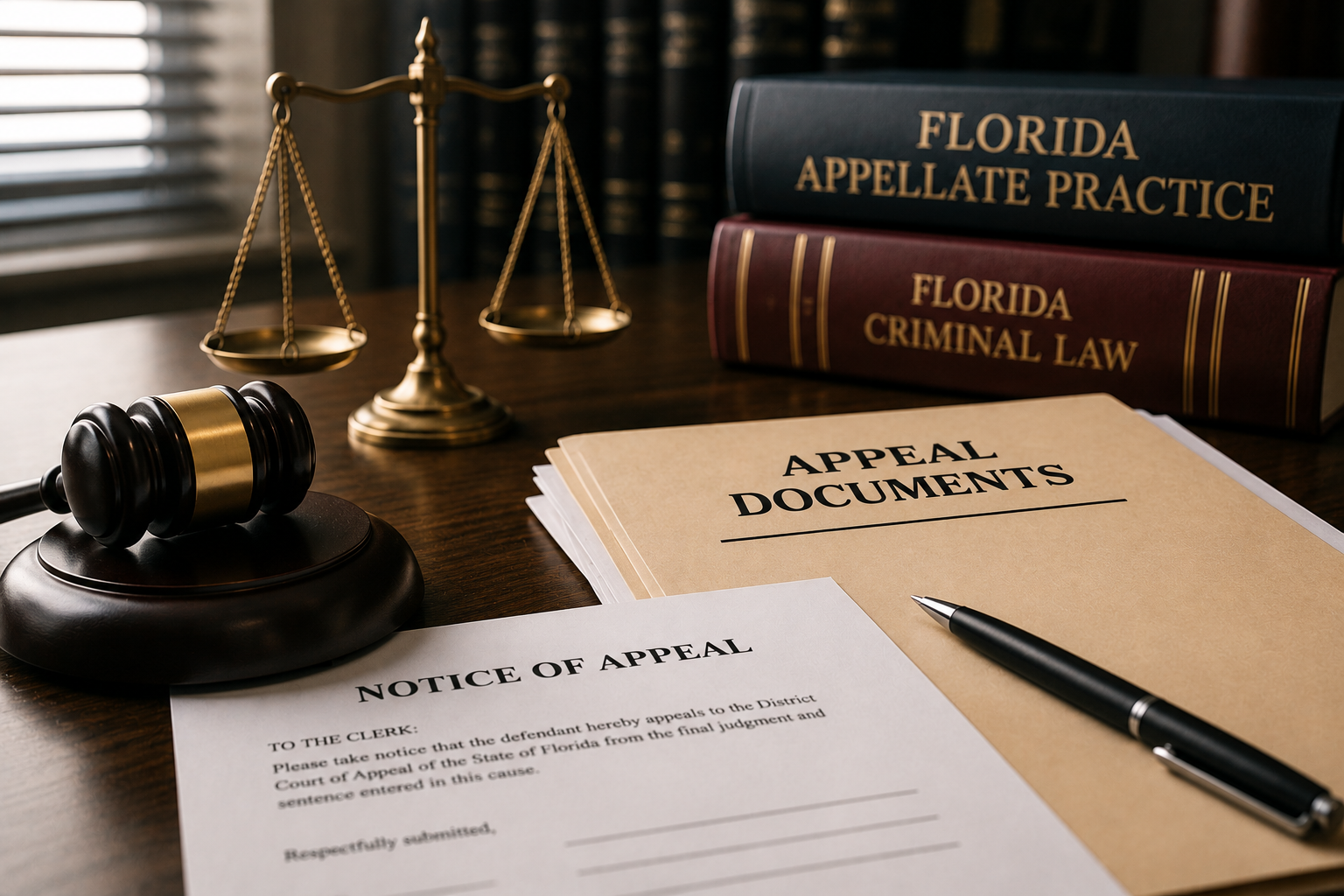
Once a verdict is reached in a criminal case, the judge will typically schedule a sentencing hearing. After sentencing, the window for filing an appeal opens. Appeals are not automatic in most cases; instead, the defendant or their legal team must file a “Notice of Appeal” to initiate the process. In Florida, this notice must be properly filed within 30 days of the judgment and sentence, or the right to appeal may be lost.
Key Filing Deadlines and the Appeals Process in Florida
Timing is critical in any Florida criminal appeal. Strict adherence to deadlines is required:
-
The Notice of Appeal must be filed with the trial court within 30 days of sentencing.
-
Afterward, appellate briefs are submitted according to a set schedule, where arguments and records from the trial are reviewed.
-
The prosecution has the opportunity to respond to these briefs before the appeals court considers the matter.
This entire process is legal-paperwork-intensive and requires precise attention to detail, particularly in preparing the appellate record and legal arguments.
Common Grounds for Appeal in Florida Criminal Cases
Appealing a conviction is about correcting legal errors, not simply retrying the entire case. Some of the most common grounds for appeal include:
-
Improper admission or exclusion of evidence during trial
-
Mistakes in jury instructions or procedures
-
Constitutional violations affecting the defendant’s rights
-
Ineffective assistance of trial counsel
-
Sentencing errors or excessive punishment
Appellate attorneys review transcripts and filings from your case to locate errors that may have influenced the verdict or sentence.
How Appellate Attorneys Challenge Legal Errors
Appellate cases rely on a thorough review of everything that occurred during your trial. Appellate litigation attorneys at Dickstein Law focus on the record established in the lower court. They may challenge incorrect rulings, failures to suppress unlawfully obtained evidence, or improper instructions to the jury. For instance, if a judge in Hillsborough County wrongly allowed inadmissible evidence that prejudiced the jury, appellate counsel would highlight this mistake and argue how it affected the outcome.
It’s important to note that appeals do not allow new evidence or witnesses. The appellate court evaluates whether errors were significant enough to impact the outcome, and if so, could reverse the conviction, modify the sentence, or remand for a new trial.
Your Next Step: Contact a Tampa Bay Appellate Attorney Today
If you or someone you care about is facing the consequences of a criminal conviction in Tampa, Lakeland, or St. Petersburg, navigating the appellate process is best handled by skilled legal representation. The attorneys at Dickstein Law have deep roots in West-Central Florida and extensive experience handling criminal appeals and post-conviction relief. To learn how an appeal could offer hope for a better result in your case, call (813) 285-9074 or fill out our confidential online form today to schedule your confidential consultation.