
When you have been granted probation in West-Central Florida, particularly in areas like Hillsborough, Pinellas, or Polk counties, strict compliance with the court’s terms is an absolute requirement. Even minor slips, such as missing a scheduled check-in with your probation officer or failing a random drug test, can lead to swift legal action, including the issuance of an arrest warrant. Understanding how Florida courts treat these violations, and what steps to take if you are accused, is crucial if you want to protect your freedom and future.
Types of Probation Violations in Florida
Florida courts distinguish between two main categories of probation violations:
-
Technical Violations: These occur when you fail to follow the administrative terms of probation. Examples include missing an appointment with a probation officer, failing to pay fines or court costs, or not completing required community service hours.
-
Substantive Violations: These involve new criminal allegations while you are on probation, such as being arrested for a new offense.
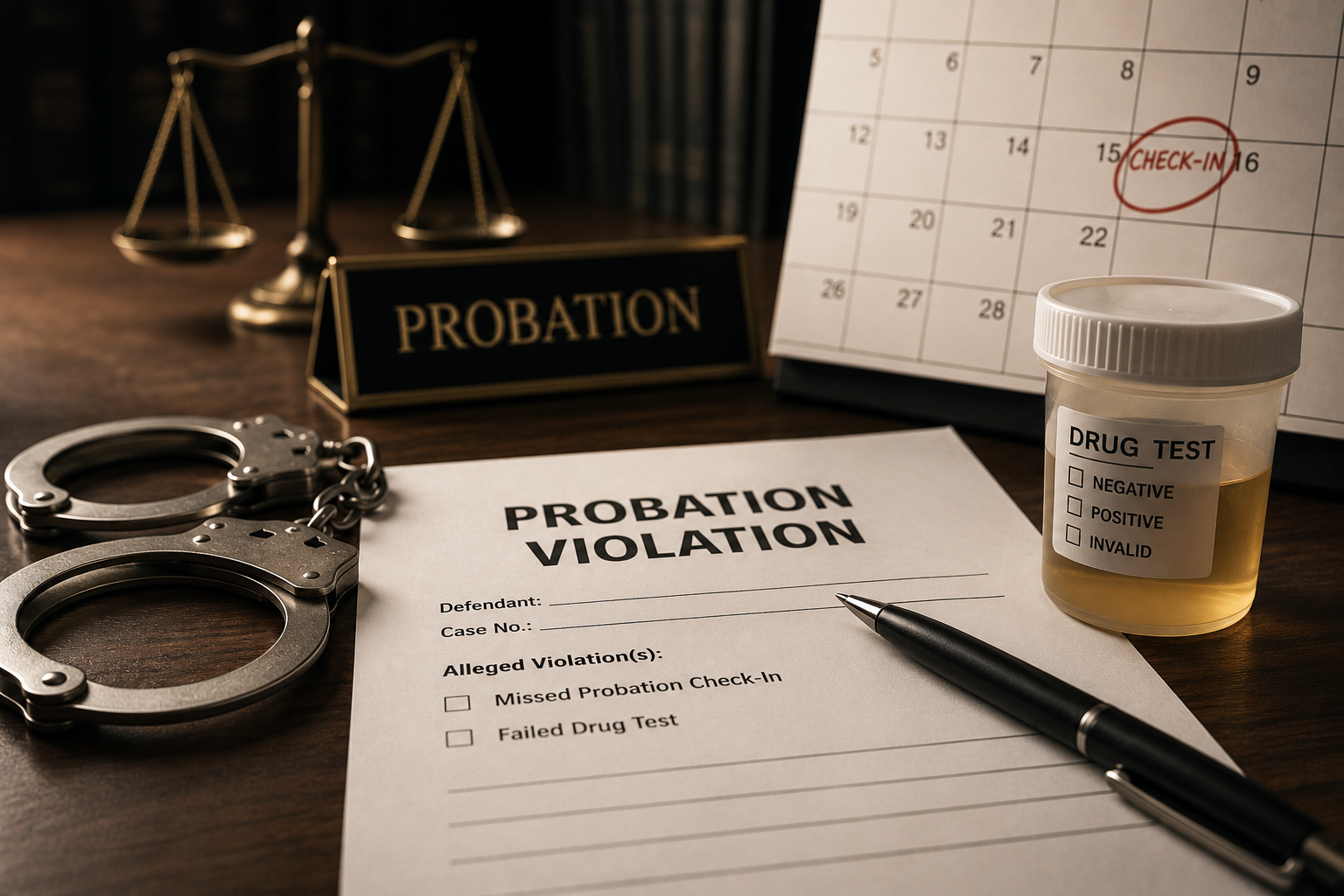
Missing a probation officer check-in or failing a drug test typically counts as a technical violation, but courts in West-Central Florida treat these matters seriously, especially if the violation is repeated or if it forms part of a pattern.
What Happens After a Technical Probation Violation?
The process after a technical violation is usually prompt in Florida. If you miss a check-in or fail a drug test, your probation officer may submit an Affidavit of Violation to the court. Judges in Hillsborough, Pinellas, or Polk County can then:
-
Issue a warrant for your arrest, often without the possibility of bond.
-
Schedule a violation of probation (VOP) hearing where the prosecution must prove the violation occurred by a preponderance of the evidence—a much lower standard than “beyond a reasonable doubt.”
In many instances, the VOP hearing occurs quickly, and your probation officer’s testimony about your missed appointment or failed drug test can be enough for the court to determine a violation has occurred.
Potential Penalties for Probation Violations in Local Courts
If a judge finds that a probation violation occurred, penalties can vary significantly, and often depend on your criminal history, the nature of the original offense, and the specific facts of the violation. Common consequences in the Tampa Bay area include:
-
Reinstitution of probation with stricter conditions (like increased check-ins or mandatory drug treatment).
-
Revocation of probation and imposition of the original jail or prison sentence.
-
Additional fines and court costs.
For example, in a recent case in Polk County, a probationer who missed several check-ins and failed a drug screening was immediately detained and ultimately ordered to serve time in jail, despite the initial offense being non-violent.
Effective Defense Strategies in West-Central Florida Probation Cases
If you have been accused of a probation violation in this region, it is critical to seek qualified legal representation. Some proven legal strategies include:
-
Presenting medical or family emergencies as explanations for missed check-ins, especially if documented.
-
Challenging the reliability or handling of drug test results.
-
Demonstrating substantial compliance with other terms of probation, which can sometimes convince a judge to issue a warning rather than more serious penalties.
-
Negotiating alternatives such as entry into treatment programs, rather than incarceration.
A criminal defense lawyer familiar with courts in Tampa, Lakeland, and St. Petersburg can make a significant difference in the outcome by navigating local procedures, providing persuasive advocacy at the hearing, and ensuring every detail of your side is heard.
Contact Dickstein Law for Immediate Probation Violation Help
If you or a loved one is facing a probation violation in Tampa, Lakeland, or St. Petersburg, FL, time is critical. The legal team at Dickstein Law has a proven track record in handling probation violations and can help defend your interests in West-Central Florida courts. For urgent assistance, call (813) 285-9074 or fill out our secure online form to arrange a confidential consultation today.